 Reviews


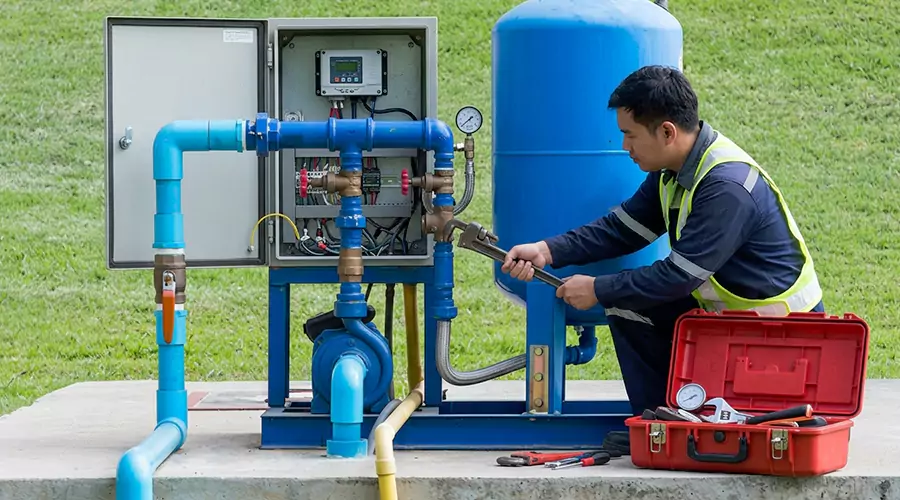
The most common problem of a home water pump is a failed pressure switch, and pressure switches with capacitors and control boxes account for about 30% of all pump service calls. The fix costs $150 to $300 installed against $975 to $2,824 for a full pump replacement.
Water pump problems almost always start at the cheap parts. The switch sticks first. The seals weep second. The motor dies last.
Knowing that order saves real money because homeowners who replace the pump for a $30 switch problem pay fifty times the honest price.
The Pumps in Home Plumbing
Three pump types serve residential plumbing and each fails in its own style. The well pump pulls or pushes water from the ground into the house. A booster pump raises weak municipal pressure. A recirculation pump keeps hot water moving so taps run warm instantly.
Design decides the weak points. Submersible well pumps live underwater and hide their symptoms until performance drops. Above-ground jet pumps and boosters expose their shaft seals and switches where you can see and hear them. Recirculators run nearly constantly which wears their small bearings first.
The failure list below applies across all three. Only the access changes.
Pressure Switch Failure Is the Most Common Problem
The pressure switch is the pump's brain and its most fragile part. The switch reads water pressure and tells the motor when to start and stop. Its electrical contacts pit and stick with every cycle until one day they stop connecting.
The evidence backs the ranking. Electrical components lead all pump service calls and repairs for them run $150 to $500. A stuck switch mimics total pump death perfectly which is why so many working pumps get replaced.
One free test settles it. Tapping the pressure switch gently often frees stuck contacts and corrosion or debris can block contact between the electrical components. A pump that springs to life after a tap just told you the diagnosis.
Insider Tip: The switch part itself costs $20 to $50. Confident DIYers with the power off can swap one in twenty minutes.
Leaks and What the Seals Tell You
Leaks rank second among pump failures and the shaft seal causes most of them. A leaking water pump seal lets pressurized water escape where the motor shaft enters the pump body. Heat and mineral-heavy water harden the seal until it weeps.
Location reads the leak. Water leaking from water pump housings at a fitting means loose threads or a failed O-ring which costs dollars. A pump leaking water from the shaft area means the mechanical seal which costs a service visit. Above-ground pumps make it visible since a water pump leak from weep hole openings below the shaft is the seal's designed warning that replacement time is near, often requiring well pump repair.
Recirculators write their own version. A hot water pump leaking at the flange gaskets is common on aging recirculation loops and constant heat cycling dries those gaskets early. Catch any of these leaks fast because water reaching the motor ends the story: a motor that took water is a total loss that should never be dried out and reused.
Insider Tip: Tape a dry paper towel under the pump body and check it after 24 hours. It catches the slow weep your eye misses.
Noises and What They Mean
A healthy pump hums steadily and anything else is information. Noise from water pump equipment splits into three signatures. Each one names a different failing part.
Learn the three sounds:
- Growling or grinding: Bad water pump noise that grinds points at worn motor bearings and the sound grows as bearings dry out.
- Rattling like gravel: Cavitation makes the water pump make noise like marbles in the housing because vapor bubbles collapse against the impeller. Starved intake lines and clogged filters cause it.
- Rapid clicking: A pump cycling on and off with no water running clicks at the switch and points at a leak or a waterlogged pressure tank.
Time matters with all three. A noisy pump still moves water while it announces the failure schedule.
Insider Tip: Record ten seconds of the noise on your phone. The clip helps a pro quote accurately and blocks upselling on problems you don't have.
When the Pump Stops Entirely
Total silence has a short suspect list. A water pump not working at all has lost power or its switch rather than its motor in most cases. Work the checks in order before spending anything.
The order matters. A water pump stopped working right after a storm often just needs the breaker reset since sometimes the well circuit has simply tripped. A water pump suddenly stopped working mid-shower points at the switch contacts or a tripped overload. If you're thinking my water pump is not working after both checks then the capacitor or control box joins the suspect list.
True water pump failure announces itself differently. A dead motor usually spent months hinting first through rising electric bills from a motor drawing excess power. Age finishes the diagnosis because most pumps need replacing within 10 to 15 years.
Low Pressure Problems
Weak flow frustrates more homeowners than outright failure. A struggling low water pressure pump situation has four common causes and only one of them is the pump itself. Check the cheap three first.
- A waterlogged pressure tank: The air charge inside the tank fails and the pump short-cycles instead of building pressure.
- A clogged sediment filter: A packed filter chokes flow on the house side of a healthy pump.
- A partially closed valve: Someone bumped a valve during other work.
- A tired pump: Pressure that drops noticeably during showers plus age points at worn impellers.
The tank test is free. Tap the pressure tank's side from top to bottom and the tone should change from hollow to dull partway down. Dull all the way up means waterlogged.
Warning Signs Checklist
Eight signs cover the full failure arc across every pump type. Any single water pump issue below deserves a diagnostic this month. Three or more mean start collecting replacement quotes while you still have water.
- Sputtering faucets or air bubbles in the lines.
- Rapid clicking from the pressure switch.
- Electric bills climbing without a usage change.
- Visible moisture or mineral crust on the pump body.
- Cloudy or dirty water appeared suddenly.
- A pump that runs constantly without shutting off.
- Pressure sagging when two fixtures run together.
- A system past the 10 to 15 year mark.
Three DIY Checks Before You Call
Three checks cost nothing and resolve a surprising share of dead-pump calls. Each one is safe from outside the equipment. Run all three before booking because the diagnostic fee alone runs $75 to $200 in most markets.
- Reset the breaker for the pump circuit and wait two minutes.
- Tap the pressure switch housing gently with a screwdriver handle to free stuck contacts.
- Write down the symptoms with times and sounds since detailed notes make the professional diagnosis faster and cheaper.
Insider Tip: Never open the pump or pull a well pump yourself. A submersible pull combines a 200-pound load with 240 volts which is a licensed-pro job with no safe shortcut.
What Repairs Cost in 2026?
Pump repair pricing rewards early diagnosis. Surface electrical parts stay cheap while motors and full replacements climb fast. The table shows the 2026 ladder.
| Repair | 2026 cost |
|---|---|
| Pressure switch installed | $150 to $300 |
| Control box | $200 to $400 |
| Electrical repairs overall | $150 to $500 |
| Pressure tank | $300 to $800 |
| Average pump repair | $300 to $600 |
| Full pump replacement | $975 to $2,824 typical |
One rule settles borderline cases. Replace instead of repairing when the fix exceeds half a new pump's price and the pump is past 10 to 12 years.
When to Call a Professional
Call a pro the moment the fix moves past the switch and the breaker. Four situations end the DIY lane. Each involves depth or voltage or both.
- Any work requiring the pump to leave the well.
- A motor that hums without starting after the capacitor check.
- Repeated breaker trips which signal a shorting motor.
- Dirty water arriving suddenly since that can mean a failing pump or a well problem.
Ask one question when booking. Many companies credit the diagnostic fee toward the repair if you hire them for the work.
Prevention Stretches Every Year
Pumps die early from neglect more than from miles. An annual inspection runs $250 to $550 and catches problems while repairs stay cheap. Three habits do most of the protecting.
- Fix small parts fast: A failed $250 switch left alone forces the motor to run continuously and burn itself out.
- Check the tank charge yearly: A correct air charge stops the short-cycling that wears every component.
- Bundle related repairs: Replacing the switch and gauge and tank fittings during one visit saves $175 to $300 versus separate calls.
Conclusion
The pressure switch causes more pump problems than any other part and costs the least to fix. Seals and bearings follow while the motor fails last and loudest. Anything below the well cap or inside the housing belongs to a licensed pro. This week tap your pressure tank and listen to your pump run for one minute. Two free minutes reads the first chapter before the dry-tap morning reads the last.
FAQs
How long does a home water pump last?
Most need replacing in 10 to 15 years while quality submersibles can reach 15 to 25 with good water.
Why does my pump click on and off constantly?
Short-cycling usually means a waterlogged pressure tank or a small leak. Both wear the motor fast so fix them early.
Can I replace a pressure switch myself?
Confident DIYers can with the power verified off. The part costs $20 to $50 and mounts at the tank.
Why is my water suddenly cloudy?
A worn pump can stir sediment or the well itself may have a problem. Either way it earns a professional look.
Is a constantly running pump an emergency?
Close to one. Shut it off at the breaker because a pump that never stops is burning itself out by the hour.
Do recirculation pumps fail like well pumps?
Same parts and smaller scale. Their constant runtime wears bearings faster so expect roughly a decade of service.